
If you’re a manager looking to harness generative AI to boost team productivity, improve coaching, and lead responsibly, this LinkedIn Learning path created with Microsoft is a practical, well-rounded choice. Who Is It For? Managers at any level wanting to integrate AI into daily management. Leaders aiming to improve career conversations and team culture with... Continue Reading →
When AI Efficiency Gains Create Hidden Workloads: What Every Professional Must Know
In his thought-provoking article on The AI MEMO, Andreas Welsch highlights a critical challenge in the AI-driven workplace: the efficiency gains one person enjoys by using AI tools often translate into additional review and correction work for others. As AI enables rapid content generation, many users settle for “good enough” outputs, shifting the burden of quality... Continue Reading →
Quick Review: The Economist’s “Understanding and Applying AI in Business” Course

If you’re a professional looking to confidently navigate AI’s impact on business without getting lost in technical jargon, this two-week online course by The Economist is worth considering. Who Is It For? Business leaders, managers, and executives wanting to understand AI’s practical applications. Professionals aiming to leverage AI tools like ChatGPT to boost productivity. Anyone interested in... Continue Reading →
🧠 “No History, No Training: How to Use ChatGPT’s Privacy-First Temporary Chat”

If you love exploring AI tools like ChatGPT and want to get the most out of them without compromising your privacy or saving your chats permanently, then ChatGPT's Temporary Chat feature is your new best friend. In this post, we’ll cover: ✅ What the Temporary Chat feature is 🔒 Why you might want to use... Continue Reading →
Mastering Prompt Engineering: Key Insights from Google’s Must-Read Whitepaper

This whitepaper recently shared by Lee Boonstra of Google serves as a comprehensive guide for leveraging LLMs effectively in production environments, highlighting techniques, strategies, and best practices that are shaping the future of AI applications. The whitepaper can be downloaded here. Looking for a quick wrap-up of the whitepaper? Here goes! Here are the key... Continue Reading →
Dilemma for Senior Executives: Should you accept that LinkedIn request?

This is one question I’ve been asked multiple times by trainees whenever I’ve conducted my LinkedIn training sessions for various senior executives across the globe. The typical query is that, “I just don’t know that person, so why should I connect with him/her?” Well, for starters, LinkedIn is not Facebook. The one goal to keep... Continue Reading →
How to tag your colleagues on LinkedIn without irritating them!

Has your colleague tagged you one of their LinkedIn posts? And do you keep getting irritating alerts from LinkedIn every time someone likes or comments on that post? Well, there’s a hack for that too! 😊 Tagging on LinkedIn If you’re tagging someone because you’re mentioning them for their contribution or wanting to highlight them... Continue Reading →
Tapping into the power of new scicomm formats to control the spread of coronavirus

As the world struggles to cope with the coronavirus pandemic, simple and appropriate science communication can be a very powerful in helping governments, local authorities, businesses, institutions, and the common public in controlling the spread and minimizing the damage caused by this pandemic.
Three reliable sources to get all the information you need on the novel coronavirus
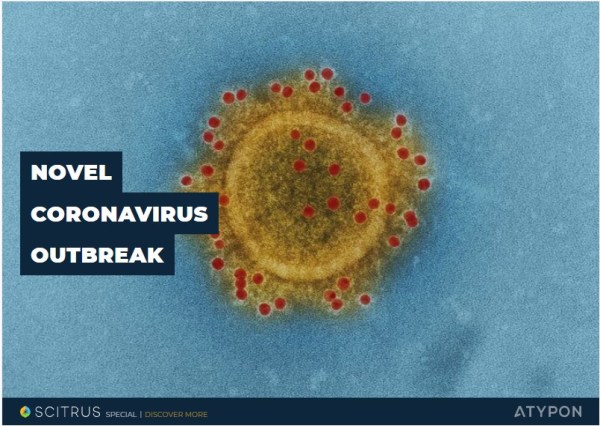
Three important and trusted sources that might suffice the needs of most researchers, doctors, government authorities, and the general public for information on the novel coronavirus.
The coronavirus has sparked a mini revolution of sorts in the need for Science Communication

Science communication is ripe for a paradigm change, and newer content formats might have a role to play. This probably hasn’t been more evident than now given the situation around the novel coronavirus (COVID-19). As I type this sentence, there are a total of 119,134 confirmed coronavirus cases* worldwide. Mainland China has detected 80,958 cases, half of... Continue Reading →
 Just Being Resourceful!