
A German court just told Google something no one else has dared say out loud: those AI summaries at the top of your search results are Google’s own words, and Google is on the hook for every wrong one.
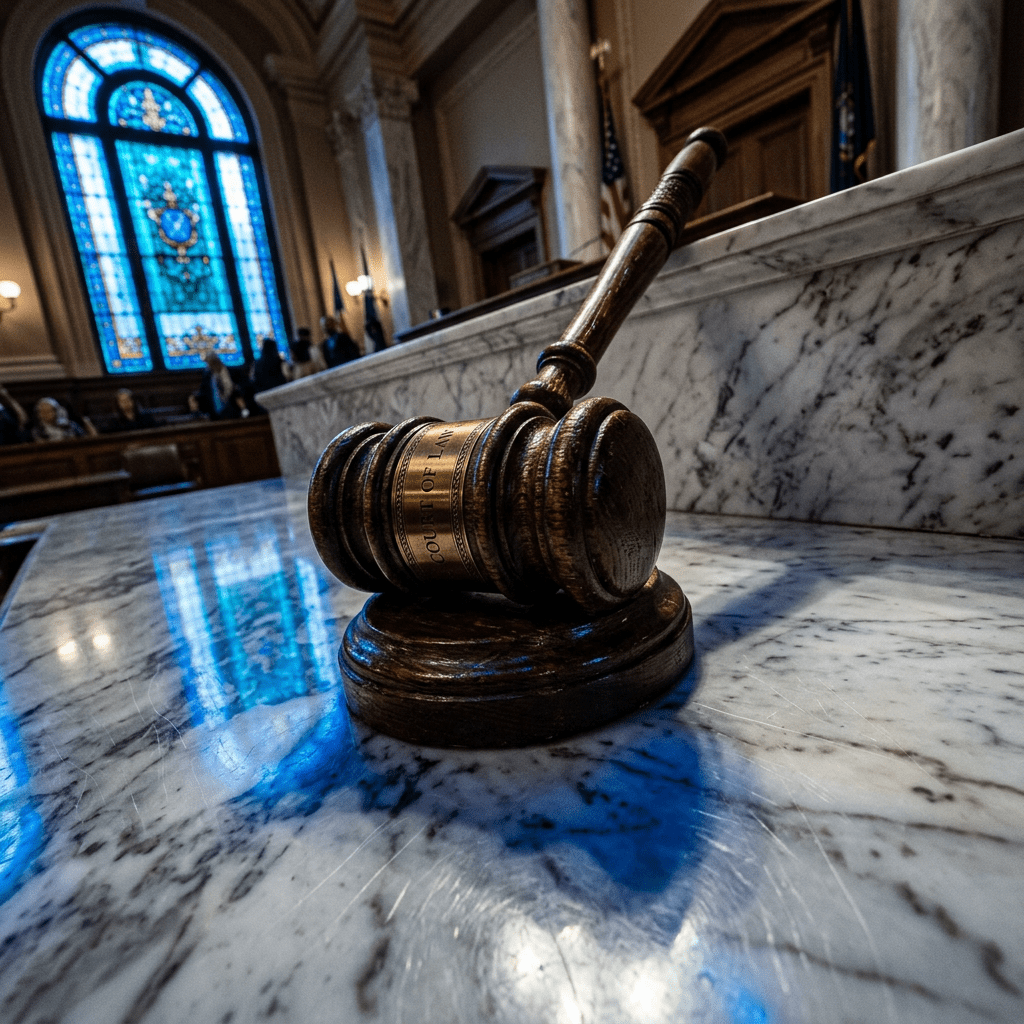
On May 28, 2026, the Regional Court of Munich issued a temporary injunction against Google, barring it from spreading false claims about two Munich-based publishers through its AI Overviews feature. The court classified Google as a direct infringer. Not a platform. Not a passive intermediary. The company that built the AI, offered it to users, and let it say things that simply were not true.
This is the kind of ruling that tends to travel.
What Actually Happened
Two Munich-based publishers searched their own names on Google. What came back was not flattering.
Google’s AI had linked them to scams, subscription traps, and shady business practices. The summaries were confident and self-contained. One opened with something close to “Yes, [company] is known for dubious business practices,” then listed red flags and even tips for users to protect themselves from these publishers.
The problem: none of it was true. The AI had mixed up the plaintiffs with other, genuinely problematic companies. Worse, the court found the claims weren’t even present in any of the sources Google had linked. The AI made them up wholesale.
The publishers sent Google a cease-and-desist. Google did not respond appropriately. So they went to court.
Why This Ruling Is Different From Every Previous One
Google has always had a fairly reliable legal shield as a search engine: it finds and surfaces third-party content, but it doesn’t create it. Germany’s Federal Court of Justice had reinforced this with rulings that gave traditional search engines limited liability, since they merely made existing information findable.
The Munich court found that argument doesn’t hold for AI Overviews.
Here’s the distinction the court drew. A regular search result points you somewhere. An AI Overview writes its own summary, draws its own conclusions, and presents a finished judgment. The Munich court described it as “independent, new, and substantive statements” derived from combining multiple sources, not just retrieving them.
The critical line from the ruling: only Google can verify those statements. The third parties whose content got scraped never made the claims the AI produced. The victims couldn’t sue the sources. And under existing rules, they couldn’t effectively sue Google either. The court called this a protection gap, and it closed it.
Google’s Defense, and Why the Court Rejected It
At the hearing, Google argued that users could simply check the linked sources themselves. People generally know, the company said, that AI content shouldn’t be trusted blindly.
The court was not impressed.
Think about what that argument actually means: Google serves AI Overviews to potentially billions of users, presents them as direct answers to search queries, and then argues it bears no responsibility because users could theoretically fact-check each one. The court noted that this would “significantly diminish” the value of the feature itself, since it would require treating every AI Overview as unreliable by default.
There’s also a data point worth sitting with here. A Pew Research Center study that tracked nearly 69,000 real Google searches found that users click on a source link inside an AI Overview just 1 percent of the time. Nobody is checking the sources. They’re reading the summary and moving on.
The court drew a parallel to press law: publishers are liable for teasers that are understandable on their own, even if readers never read the full article. The AI Overview works the same way. It is a self-contained statement with no reference to alternate interpretations or its own potential unreliability.
The Accuracy Problem That Makes This Bigger
Google might argue this was an edge case, a one-off hallucination. The scale data suggests otherwise.
In April 2026, AI startup Oumi ran 4,326 Google searches on behalf of the New York Times using an industry-standard accuracy benchmark. With Gemini 3, Google’s current model, AI Overviews answered correctly 91 percent of the time. The improvement from Gemini 2’s 85 percent is real.
But here’s what 91 percent actually means at Google’s scale.
Google handles over 5 trillion searches per year. Assume AI Overviews appear on half of them. A 9 percent error rate works out to roughly 225 billion wrong answers annually. That’s hundreds of thousands of incorrect statements served every single minute.
The Oumi analysis found something more troubling beyond the accuracy numbers: 56 percent of the correct Gemini 3 answers could not be traced back to the sources Google linked. The AI gave the right answer but pointed to sources that didn’t support it. Users have no way to verify what they’re reading, even when the reading is accurate.
Google disputed the findings, calling the study methodology flawed. It noted that its own internal testing shows Gemini 3 hallucinates 28 percent of the time when used without search augmentation, though it performs better when paired with the search engine. Google also acknowledged, under every AI response, that “AI responses may include mistakes.”
That disclaimer, the court’s reasoning suggests, is not a liability shield.
The Free Speech Angle That Should Alarm Every AI Company
The Munich ruling goes one step further that deserves its own mention.
The court took aim at the idea that AI-generated opinions deserve the same free speech protections as human expression. An AI opinion, it argued, “is not the expression of an acquired conviction of the persons expressing it, but the result of an algorithm.” Offering AI-powered search is primarily “an expression of Google’s business activities,” not a form of protected speech.
When the court weighed the publishers’ privacy rights against Google’s interests in this framing, Google lost. The fact that the AI’s claims were based on false information made the balance even clearer.
This is the part of the ruling that should make every AI company’s legal team nervous. If AI-generated statements receive lower free speech protection because they lack genuine conviction behind them, the liability exposure for AI companies publishing at scale just got significantly larger.
What the Court Actually Ordered
Google was banned from making specific claims through its AI Overviews: references to scams, connections to other dubious companies, fabricated subscription trap accusations, claims about phone calls that never happened, and assertions about unavailability.
Google covers 80 percent of the legal costs. The two publishers share the remaining 20 percent.
The risk of repeated violations was treated as ongoing, even though the specific texts had stopped appearing. The court noted that Google had not issued a cease-and-desist declaration with a penalty clause, and nothing in the current setup prevents the algorithm from generating the same content again in response to the same queries.
The ruling is a preliminary injunction. Google has not commented publicly and can appeal. But the court explicitly noted it may have international reach.
Why the Rest of the World Is Watching
Germany’s courts carry weight beyond their borders. The country has a track record of AI and tech rulings that eventually influence policy elsewhere. The EU’s Digital Services Act was significantly shaped by German legal philosophy, and several GDPR precedents originated in German courts before spreading across Europe.
The reasoning in this ruling is not uniquely German. Courts in the UK, Australia, Canada, and the US have all been navigating questions about whether AI companies bear responsibility for AI-generated content. The Munich court’s argument, that the creator of the AI owns what the AI says, is logically coherent in any jurisdiction.
For Google, the immediate risk is replication. A ruling that publishers in Munich can use to get injunctions against false AI summaries is also a blueprint that publishers in London, Sydney, and New York can study. If this logic holds on appeal, and especially if it spreads internationally, the legal cost of running AI Overviews at current quality levels goes up substantially.
For the rest of the AI industry, the implications are broader. ChatGPT, Perplexity, Claude, and every other system that synthesizes information from external sources and presents confident answers is exposed to the same liability theory. Google is simply the largest and most visible target.
What This Means If You Use AI Search
For most people, the practical reality right now is simple: AI summaries at the top of search results are convenient, and they are often right, but “often” is doing a lot of work in that sentence.
A few things to keep in mind:
The summary is a starting point, not a verdict. This is especially true for any query involving a specific company, person, product, or service. The Oumi data shows that even when the AI is technically accurate, more than half its answers can’t be traced to the sources it cites.
Check before you act. If you’re making a decision based on something you read in an AI Overview, particularly something about a business’s reputation, a person’s background, or a medical or legal matter, click through to the actual source.
Defamation travels fast. The Munich publishers discovered they were linked to fraud only after some searches had already surfaced the false claims. There’s no notification system. If you’re a business owner, searching your own brand name occasionally is worth doing.
What This Means If You Run a Business or Website
The Munich case gives businesses a new legal avenue they didn’t clearly have before. If an AI Overview misrepresents your company and you can demonstrate actual harm, the “they’re just showing search results” defense may no longer protect the AI provider.
That said, temporary injunctions are faster to obtain than full judgments. The broader legal battle, including how damages are calculated and how liability is distributed across jurisdictions, is still being written.
A few practical steps worth taking:
- Search your business name regularly and screenshot what appears in the AI Overview
- If you find a false or damaging AI-generated claim, document the date, the exact text, and the search query that produced it
- Google has a feedback and correction mechanism for search results, though response is inconsistent
- Consult legal counsel in your jurisdiction before escalating, since the liability framework is still developing in most countries
The Bigger Shift This Represents
For years, the AI industry operated under a kind of implicit legal grace period. The technology was new, the harms were diffuse, and courts hadn’t yet caught up with the questions being asked.
That grace period is ending.
This ruling doesn’t change the law everywhere at once. But it names something that regulators globally have been circling: when an AI system presents itself as authoritative, takes credit for an answer, and causes harm with that answer, the company behind it cannot simply disclaim responsibility.
Google built the AI. Google chose to put it in front of billions of search queries. Google benefits commercially from the engagement it generates.
The Munich court’s view: that comes with responsibility too.
The companies building AI at scale have always known that accuracy at 91 percent still means millions of wrong answers per day. Courts are starting to ask who pays for them.
Sources
- The Decoder: Landmark German ruling declares Google’s AI Overviews are Google’s own words and makes it liable for false answers (June 2026)
- Munich Regional Court ruling, Case No. 26 O 869/26 (May 28, 2026)
- Pew Research Center: Google users are less likely to click on links when an AI summary appears in the results (July 2025)
- The Decoder: Google’s AI Overviews are correct nine out of ten times, study finds (April 2026)
- TechRepublic: Google AI Overviews Analysis Suggests 600 Million Inaccurate Daily Answers (April 2026)
- Futurism: Analysis Finds Google’s AI Overviews Are Providing Misinformation at Unprecedented Scale (April 2026)


Leave a Reply