
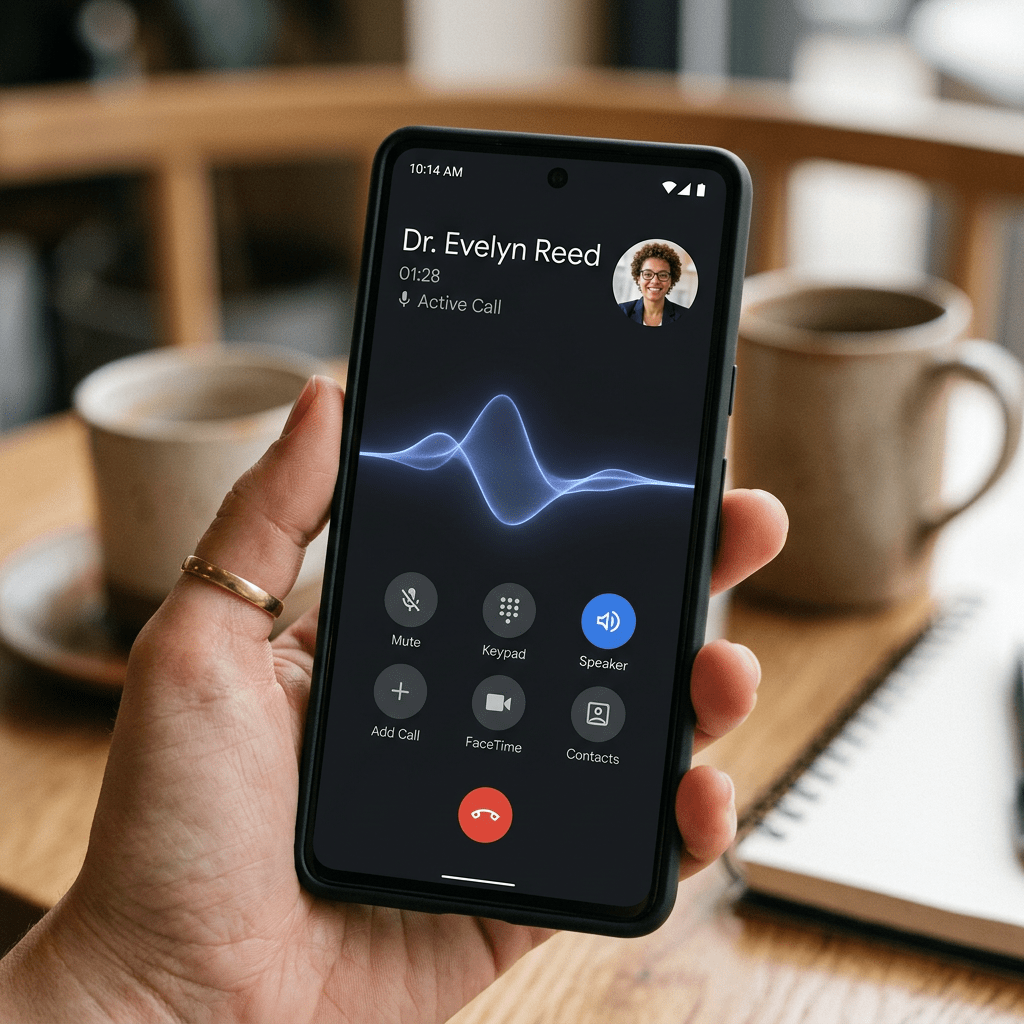
Mukesh Ambani just told his shareholders that AI is about to answer your phone calls, run your apps, and watch over your home, all through one company.
At Reliance’s annual shareholder meeting on June 19, 2026, the world’s richest Asian businessman laid out a plan to put AI inside every phone call, every app interaction, and every living room for the 500 million plus people who use Jio. This is not a side project. It is Reliance’s bet on becoming India’s AI champion right as Jio Platforms heads toward what could be the country’s largest ever stock market listing.
Here’s the thing. Most AI assistants today live inside an app you have to open. Jio is trying something different: baking AI directly into the phone network itself, so it works on a regular call without you downloading anything. If that works the way Reliance describes it, it could change how half a billion people experience something as basic as answering the phone.
Let’s break down what was actually announced, what it means for you whether you live in Mumbai or Manchester, and where the real questions still sit unanswered.
What Reliance announced, in plain English
Four new AI products came out of the meeting, plus a major business update. Here is each one, stripped of the corporate language.
1. Jio Call Agent: an AI that joins your phone calls
This is the headline feature. Jio Call Agent is an AI assistant you activate by saying “Hey Jio” during a regular phone call. Once it is active, it can transcribe the conversation, generate a summary afterward, and complete tasks like booking a cab, ordering food, or making a reservation, all without you switching to a separate app.
The detail that matters here is distribution, not novelty. AI call assistants already exist. What is new is that Jio is building this straight into the telecom network that carries the call, rather than shipping it as a download from an app store. That is a meaningfully different approach from how Amazon and Google have built their ambient AI assistants, and it gives Reliance a head start that is hard for a third party app to match. The service is expected to roll out later this year.
2. A smarter MyJio app
The MyJio app, which most Jio customers already use to manage their plans, is getting an AI layer that can complete account tasks through plain language requests. Want to activate an eSIM or switch to a different roaming plan before a trip? You will reportedly be able to just ask, instead of digging through five menus to find the right toggle.
3. TeleFrame: an AI screen for your home
TeleFrame is Jio’s new home display, designed to proactively surface things like weather alerts, your schedule, and household reminders without you having to ask. Think of it as a digital picture frame that has opinions about your day. It puts Reliance squarely in the same lane as Amazon’s Echo Show devices and Google’s Nest Hub, both of which have spent years building exactly this kind of ambient, screen based home assistant.
4. AI tools for healthcare, education, farming, and small business
Reliance also introduced four sector-specific AI products: JioHealthIQ, JioLearnIQ, JioKrishiIQ for agriculture, and AI Vyapar for small business owners. All four are designed to work across multiple Indian languages, which matters enormously in a country where English fluency is far from universal.
Why this is happening right now
Three forces are colliding here, and understanding them explains why Reliance is moving this fast.
First, the IPO clock is ticking. Jio Platforms filed its draft prospectus for an initial public offering on the same day as this announcement, proposing a fresh issue of up to 270 million shares. Reports peg the raise at roughly $3.8 to $4 billion, which would make it India’s largest ever IPO, edging out Hyundai India’s 2024 listing. A company about to go public needs a growth story, and “AI in every call, app, and home for half a billion users” is a far better pitch to investors than “we sell phone plans.”
Second, Reliance’s stock has had a rough year. Shares are down around 17% in 2026, and the broader Indian market has underperformed global peers. New AI products aimed at hundreds of millions of existing customers give the company a fresh growth narrative heading into the listing.
Third, India wants its own AI players, not just AI customers. Ambani put it directly at the meeting: India should not be a mere consumer of AI created elsewhere, but a creator and global leader in it. That ambition got a real world stress test recently when access to one of Anthropic’s most powerful models was restricted, a reminder that decisions made in Silicon Valley or Washington can directly affect what Indian businesses are able to build with. Reliance’s response is to build its own stack rather than keep renting someone else’s.
How this fits into Reliance’s bigger AI bet
This announcement does not exist in a vacuum. Reliance has spent the past year assembling serious AI infrastructure and partnerships:
- It launched Reliance Intelligence, a dedicated arm to build AI infrastructure and services across 22 Indian languages
- It committed to a $110 billion AI infrastructure investment plan over the coming years
- It partnered with Google, Meta, and Nvidia for compute, models, and infrastructure
- It signed a deal with Meta just last week to build an AI data center in Gujarat
Reliance is also not the only Indian conglomerate racing here. Tata Consultancy Services, Infosys, and rival Adani Group are all making similar moves. This is a full-blown corporate AI race playing out inside one country, and Reliance just made its biggest consumer facing move yet.
What this means for you, in practical terms
You don’t need to be a Jio customer for this to matter. Here is what to actually pay attention to, broken down by who you are.
If you are a Jio user in India
- Watch for the official rollout notice. Jio Call Agent is “expected to launch later this year,” not live yet. Don’t trust any app or message claiming to activate it early. Wait for an announcement directly from Jio’s official app or website.
- Check your MyJio app permissions before the AI update lands. Once the natural language features roll out, review what account actions the AI will be allowed to take on your behalf, and disable anything you are not comfortable automating.
- Read the consent prompts carefully. Reliance has said the new services will operate with user consent. When you see that consent screen for Jio Call Agent, actually read it before tapping accept.
If you are a small business owner or freelancer, anywhere
- Think about what an AI-call-layer means for your own customer calls. If a call assistant can already book a cab or a table by voice, the same kind of tooling is heading toward customer service lines and appointment booking everywhere, not just in India. Start exploring what call automation tools exist for your business now, so you are not playing catch up in twelve months.
- Look at AI Vyapar as a signal, not a product to wait for. Even if you will never use Jio’s small business AI tool, the fact that a telecom giant is building one tells you where the market is heading: AI handling routine business admin by default. Audit your own repetitive admin tasks (scheduling, order tracking, basic customer queries) and identify which ones could be automated today with existing tools.
If you just want to understand where ambient AI is going
- Notice the pattern across companies. Amazon’s Echo Show, Google’s Nest Hub, and now Jio’s TeleFrame are all converging on the same idea: a screen in your home that proactively tells you things instead of waiting for a question. This is the next interface war, and it is happening in living rooms, not browsers.
- Get comfortable with voice activation as a default, not a novelty. “Hey Jio” joins “Hey Siri,” “Alexa,” and “Hey Google” as a wake phrase that triggers an AI listening for a task. If you have avoided voice assistants so far, this is a good moment to try one and understand the convenience and the trade-offs firsthand.
The benefits, honestly assessed
Some of this is genuinely useful, not just marketing.
Less app-switching friction. If Jio Call Agent works as described, booking a cab mid-call without opening a separate app removes a real point of friction. Most people do not enjoy juggling apps while on the phone.
Built-in accessibility for non-English speakers. Products like JioHealthIQ and JioLearnIQ working across multiple Indian languages matters in a country where a large share of the population is not comfortable navigating English-only interfaces. This is one of the more genuinely useful parts of the announcement, especially for healthcare and education access in smaller towns and rural areas.
One less app to manage. Folding AI into the network itself, rather than requiring a download, lowers the barrier to actually using these tools. The people least likely to seek out a separate AI app are often the people who would benefit most from one.
The drawbacks, just as honestly
None of this comes free of trade-offs, and a few of them deserve more attention than they got at the shareholder meeting.
Data, and who gets to use it. When TechCrunch asked Reliance directly whether data generated through these AI products could be used to train AI models or shared with technology partners, the company did not answer. That is not a small gap. An AI that listens to your phone calls, manages your account, and sits in your living room is collecting an extraordinary amount of personal information. “Operates with user consent” is the right starting point, but it is not the same as a clear answer to “where does my data go and who else sees it.”
One company, a lot of your daily life. If the same company is handling your phone calls, your home display, your healthcare information access, and your business admin, that is a significant concentration of personal data sitting with a single provider. Convenience and concentration tend to move in opposite directions when it comes to privacy.
“Expected to launch” is not “available now.” Jio Call Agent does not have a firm launch date yet. Big AI announcements often outpace what actually ships, and on what timeline. Treat the “later this year” window as the start of the conversation, not a guarantee.
An AI on a call you did not start can feel intrusive to the other person. If your call assistant is summarizing or acting on a conversation, the other person on that call may not always know an AI is involved, depending on how disclosure is handled. This is the kind of consumer trust question regulators worldwide are increasingly paying attention to.
The honest bottom line
This is a real, large-scale bet from one of the world’s biggest conglomerates, timed deliberately around a landmark stock listing. The healthcare, education, and language-access pieces are the parts most likely to deliver genuine value quickly. The call-and-home AI pieces are the most ambitious, the most unproven, and the ones where the unanswered data question matters most.
If you are a Jio user, this is worth following closely over the next few months as the actual rollout details land. If you are not, watch it anyway. What Reliance is attempting here, AI woven directly into telecom infrastructure rather than bolted on as an app, is a model other telecom companies worldwide are very likely to copy if it works.
Half a billion people are about to find out what it feels like when their phone network itself gets an AI brain. If you found this useful, share it with anyone who has been wondering what Ambani’s AI plans actually mean beyond the headlines.
Sources
- TechCrunch: Billionaire Ambani wants AI in every call, app, and home
- Business Standard: Jio Platforms targets ₹37,700-crore IPO in India’s biggest listing
- CNBC: India’s largest telecom and digital service Jio Platforms files for IPO
- TechCrunch: Billionaire Ambani taps Google, Meta to build India’s AI backbone
- TechCrunch: Reliance unveils $110B AI investment plan
- TechCrunch: Meta signs first AI data center deal in India with Reliance
- TechCrunch: Anthropic’s safety warnings and the India model restriction


Leave a Reply